Why Am I Always Coughing at Home? A Singapore Indoor Air Guide
30 June 2026 · 4 min read
If you cough at home but stop coughing at work or outdoors, the cause is usually formaldehyde and TVOCs from new carpentry, paint, or furniture. Here is how to tell.
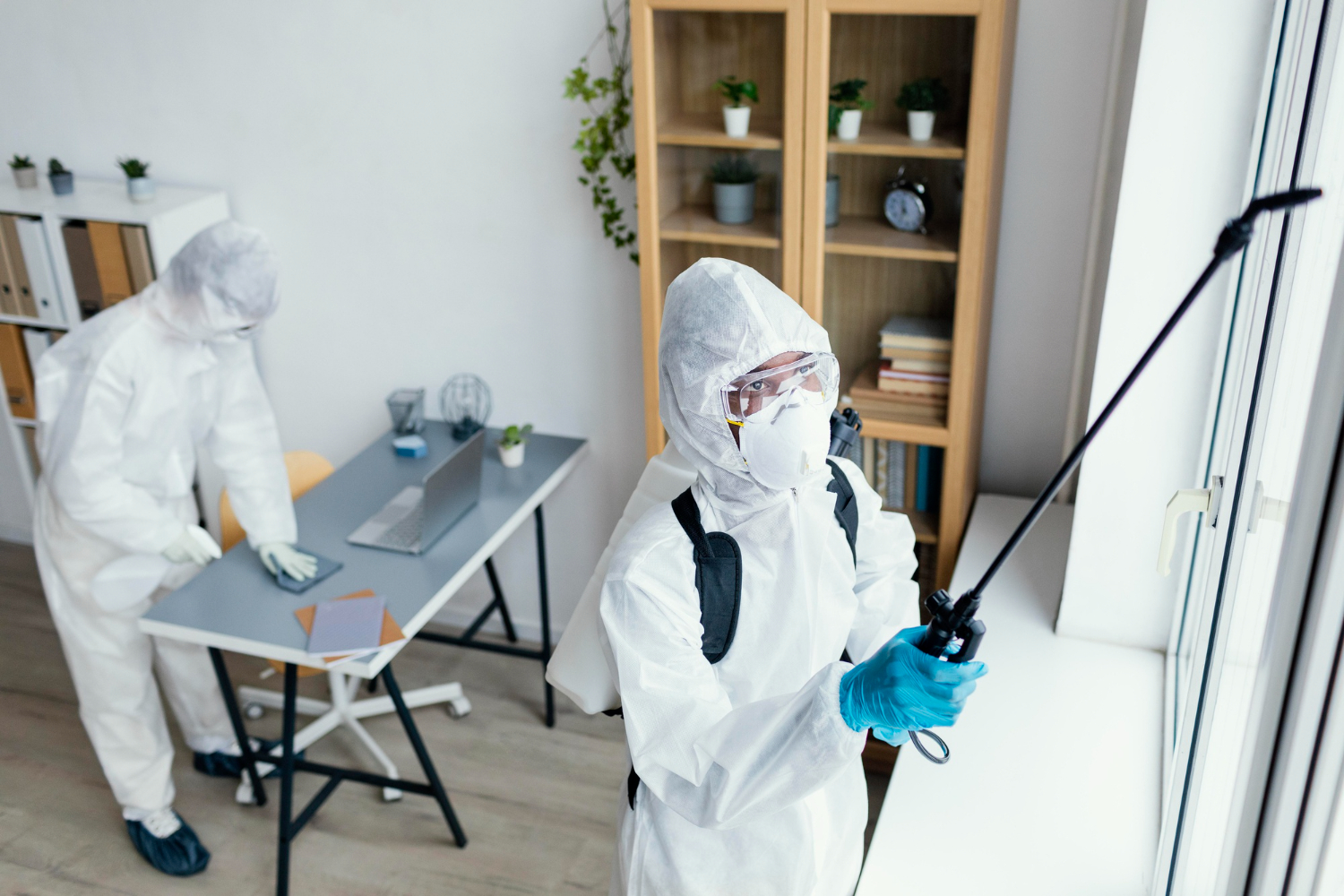
TL;DR: A persistent dry cough that flares at home and eases at work is almost always your airway reacting to formaldehyde and TVOCs in indoor air. The trigger is in your built-in carpentry, fresh paint, mattress foam, or laminate flooring, and the fix is removing the emission at the source rather than suppressing the cough.
The 60-second answer
Your throat and bronchial tubes are lined with the same kind of mucous membrane as your nose. When you breathe formaldehyde-laden indoor air, the gas dissolves in the watery layer on those tissues, forms tiny amounts of formic acid, and irritates the trigeminal nerve endings. The reflex response is a cough.
Singapore homes in the first year after renovation typically measure formaldehyde at 3 to 10 times the WHO 0.1 mg/m³ guideline, so the cough threshold is crossed routinely. Workplaces have continuous fresh-air exchange via HVAC and lower indoor formaldehyde, which is why the cough disappears at the office.
Why coughing at home is so common in Singapore
Three local factors compound:
- Sealed sleeping rooms. Most Singapore households run aircon at night with windows closed. VOC concentrations climb from 11pm to 7am, peaking on waking. The first hour of the morning is when most coughing fits start.
- Heavy built-in carpentry per square metre. A typical Singapore HDB has 30 to 50 m² of MDF and blockboard surfaces, mostly hidden behind laminate. New BTOs concentrate this in 80 to 120 m² of floor area.
- Heat and humidity accelerate emission. Formaldehyde release roughly doubles for every 7°C rise in temperature. A 32°C bedroom emits faster than the 20 to 22°C labs European safety standards are calibrated against.
The diagnostic clue: location, not time
A cough caused by indoor air follows the place. Run a 7-day log:
- Time the cough is worst (mornings? after returning home?)
- Does the cough ease within 1 to 3 hours of leaving the flat?
- Is it different after a weekend out of town?
- Does it correlate with rooms (bedroom worse than living room?)
If two of these patterns hold, the trigger is the home, not your body.
What you can change today
Three free changes that often help within a week:
- Sleep with the bedroom window cracked 1 cm and a fan running, no aircon, for three nights. Less comfortable but the cleanest test of whether the bedroom air is the cause.
- Open every cabinet door and drawer when you are not home. Trapped vapour inside cabinets is the highest-concentration source and leaks into the room every time you open a door.
- Wipe down cabinet interiors with a damp microfibre cloth weekly. Formaldehyde is water-soluble; surface residue comes off and the rate of emission drops temporarily.
These are diagnostic, not solutions. If the cough eases meaningfully, you have confirmed indoor air is the cause and can move on to fixing the source.
The most likely sources behind a coughing-at-home pattern
In our testing of HDB, BTO, and condo bedrooms across Singapore, four sources dominate:
- Built-in wardrobes. Closed cabinets accumulate formaldehyde at 5 to 10 times bedroom-air levels. Vapour leaks into the room every time the door opens. The dominant source in most flats.
- New mattress and pillow. Foam cores release formaldehyde and styrene at low rates over a large surface area, directly under your face for 7 to 9 hours.
- Newly painted walls. First 4 to 8 weeks after painting are heavy. Paint solvents emit toluene and xylene alongside formaldehyde.
- Laminate flooring adhesives. The adhesive layer beneath laminate planks emits for 8 to 24 weeks after installation.
A walk-through with your nose (open every cabinet, lean toward the mattress, stand in each room) usually identifies the worst-emitting source within 10 minutes.
When to escalate to professional treatment
Three triggers that mean the cough will not resolve on its own:
- Cough persists past week 6 despite ventilation changes and a clean medical workup
- Vulnerable groups in the household: pregnancy, infants, asthma, elderly with respiratory conditions
- Multiple symptoms together: cough plus eye stinging, sore throat, headaches, or sneezing — the multi-symptom pattern is diagnostic of elevated indoor VOCs
For source-level treatment that decomposes formaldehyde at the cabinet, wall, and flooring surfaces, see formaldehyde removal services. For the broader VOC family if the cough is paired with chemical smells, see VOC removal services.
For related symptoms that often appear with the cough: sore throat at home not work, burning nose and throat, and headaches in new BTOs.
Sources
- World Health Organization. Guidelines for Indoor Air Quality: Selected Pollutants. WHO Regional Office for Europe, 2010.
- International Agency for Research on Cancer. IARC Monographs Volume 100F: Formaldehyde. WHO, 2012.
- Wolkoff, P., Nielsen, G.D. Non-cancer effects of formaldehyde and relevance for setting an indoor air guideline. Environment International, 2010.
- ATSDR. Toxicological Profile for Formaldehyde. U.S. Department of Health and Human Services, 2017.
Frequently asked questions
Why do I cough at home but not at work?
Because the trigger is in your home, not your body. The most common Singapore cause is formaldehyde and TVOCs from new built-in carpentry, fresh paint, foam mattresses, and laminate flooring. Your office air is exchanged constantly through HVAC; your bedroom is sealed for 7 to 9 hours every night, so airborne irritants accumulate. The cough is your airway's reflex to clear the throat lining of dissolved formaldehyde.
Is this a real medical symptom or am I imagining it?
It is real. Formaldehyde is a confirmed Group 1 carcinogen by the WHO IARC, and even at low concentrations it irritates the trigeminal nerve endings in the airway, triggering a reflex cough. Singapore homes after renovation routinely measure 3 to 10 times the WHO 0.1 mg/m³ guideline. The cough is the body's correct response to a real chemical irritant, not stress or imagination.
How do I tell this from a cold or allergy cough?
A cold cough comes with congestion, fever, or coloured mucus and runs a 5 to 10 day course regardless of location. An allergy cough flares with specific exposures (dust, pollen, pet dander). An indoor air quality cough is dry, location-dependent (worse at home, better when out), and persists for weeks without progressing into other cold symptoms. If the only thing that changes the cough is your location, it is the air.
Will an air purifier stop the coughing?
Partly. A HEPA + activated carbon purifier can reduce particulate and short-term formaldehyde load in one room while running. But carbon filters saturate within weeks and need replacement. A purifier slows the symptom; it does not remove the source. The durable fix is reducing the emission rate at the carpentry, mattress, paint, and flooring surfaces themselves.
What level of formaldehyde causes coughing?
Coughing typically begins at sustained exposure above 0.1 to 0.3 mg/m³. The WHO indoor air guideline is 0.1 mg/m³ over a 30-minute average. Most Singapore HDB and BTO bedrooms in their first year sit at 0.3 to 0.5 mg/m³ overnight, well into the cough-trigger range. Children, asthma sufferers, and elderly residents react below the WHO line.
Should I see a doctor for the cough?
If the cough has lasted more than 3 weeks, yes, get a clinical exam to rule out asthma, post-nasal drip, GERD, and chronic bronchitis. Bring a record of when the cough started (relative to your move-in or renovation date) and whether it eases when you spend a full day out of the flat. If the medical workup is clean and the location pattern holds, an indoor air quality test gives you the data to act on the home environment.
Related Articles
Worried About Your Indoor Air Quality?
Get a free site inspection and air quality assessment. We'll show you exactly what's in your air — and how to fix it.