Why Your Eyes Sting When You Open New Cabinets in Singapore
28 April 2026 · 5 min read
Stinging or watery eyes when you open new cabinets is formaldehyde off-gassing from MDF, plywood, and adhesives. Here is what causes it and how to clear it.
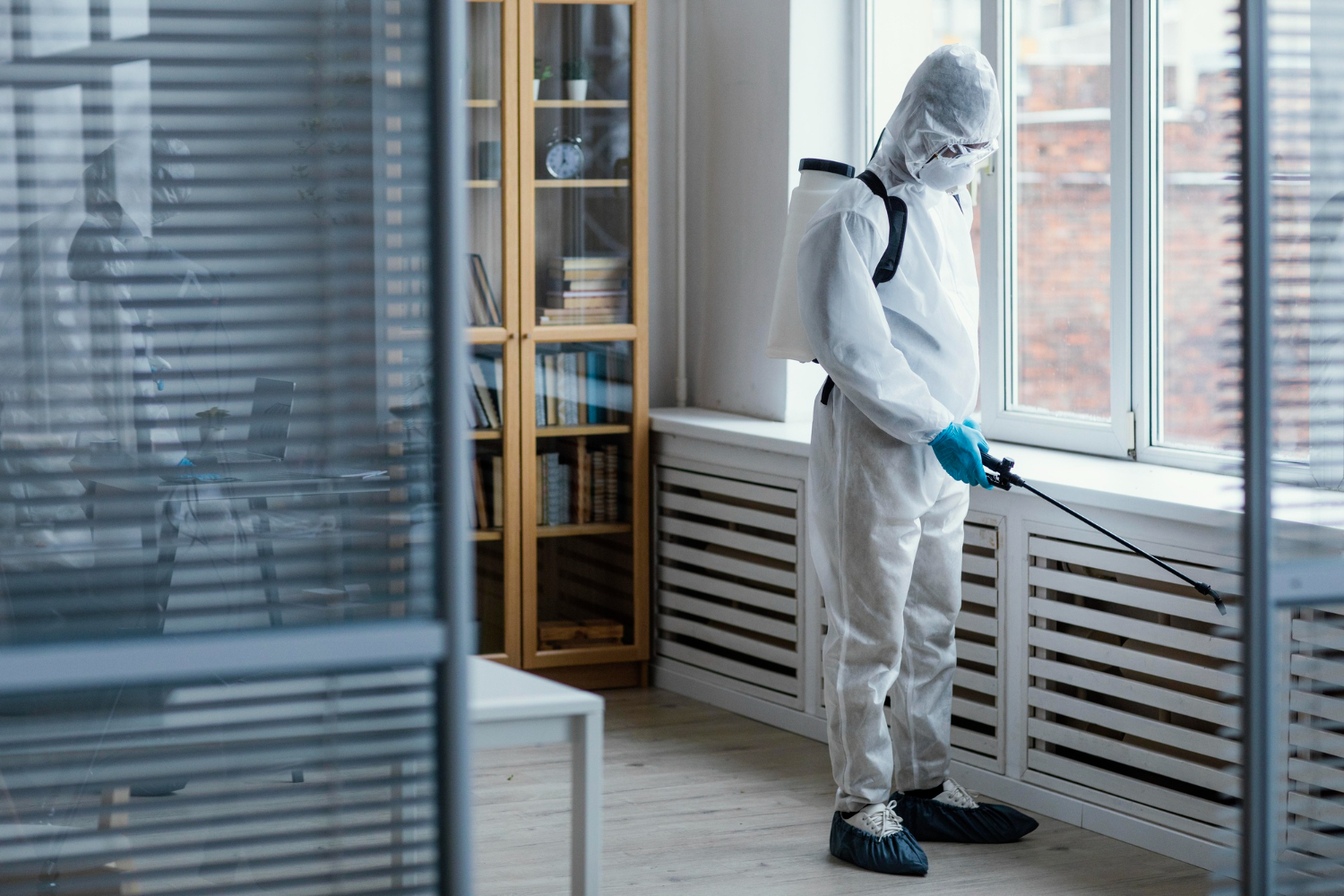
If your eyes sting, water, or feel like they are burning the moment you open a new wardrobe or kitchen cabinet, it is almost certainly formaldehyde, along with a mix of other volatile organic compounds (VOCs), trapped inside the cabinet and venting into your face when you open the door. The science is well documented and the fix in most Singapore homes is straightforward.
The 60-second answer
New furniture made from engineered wood (MDF, plywood, particleboard, blockboard) releases formaldehyde from the resins used to bind the wood fibres. Inside a closed cabinet, that formaldehyde builds up to a concentration far higher than the air in the rest of your room. When you open the door, it hits your eyes and the back of your throat, which is why the irritation feels sharp, sudden, and tied to that one moment.
The World Health Organization recommends indoor formaldehyde stay below 0.1 mg/m³ (about 0.08 ppm) over a 30-minute average. New built-in carpentry in Singapore HDB and condo flats routinely tests at 3 to 10 times that level inside cabinets during the first 6 to 12 months.
What is actually irritating your eyes
Formaldehyde is a small, water-soluble molecule. Your tear film is mostly water. When formaldehyde-laden air hits the surface of your eye, the gas dissolves into your tears almost instantly, forming formic acid in trace amounts. Your cornea responds the way it would to any chemical contact: more tears, a stinging sensation, and reflex blinking. The same mechanism explains why your nose runs and your throat feels scratchy at the same time. Your mucous membranes are reacting to the same chemistry.
The International Agency for Research on Cancer (IARC) classifies formaldehyde as a Group 1 carcinogen, the same tier as asbestos and tobacco smoke, based on long-term occupational exposure. Brief, low-level exposure from a cabinet is not by itself a cancer concern, but it is a clear sign that levels are high enough to warrant attention, especially in bedrooms where you spend 7 to 9 hours a night.
Why cabinet off-gassing is worse in Singapore
Two local factors make this problem more aggressive in Singapore than in cooler, drier climates:
- Heat and humidity. Formaldehyde release from urea-formaldehyde resin roughly doubles for every 7°C rise in temperature. A closed cabinet in an unair-conditioned HDB bedroom can sit at 30 to 33°C with 70 to 80 percent relative humidity, conditions that drive resin breakdown faster than the cooler, drier European labs where most safety testing was done.
- Air-conditioning patterns. Most Singapore households run the aircon at night with the room sealed up, then leave for work during the day. Cabinets stay closed for long stretches, so vapour accumulates inside instead of dispersing.
This is why the same flat-pack wardrobe that is unremarkable in a Stockholm apartment can produce a noticeable sting in a Toa Payoh or Punggol bedroom after a hot, closed-up afternoon.
The most common sources in Singapore homes
In our testing of HDB and condo units across Singapore, the strongest formaldehyde readings consistently come from a short list of sources:
- Built-in carpentry. ID-built wardrobes, TV consoles, and kitchen carcasses are usually MDF or blockboard with E1 or E2 grade adhesives. Cut edges, drilled holes, and unsealed backs leak more than the laminated outer surfaces.
- Flat-pack and budget furniture. Particleboard cabinets from large flat-pack retailers, Taobao, or local discount stores are often the highest single-source readings in a flat, particularly the interiors of drawers and shelves.
- Mattresses and sofas. Foam, fabric finishes, and adhesives release formaldehyde alongside other VOCs. Less concentrated than cabinets, but spread across a much larger surface area.
- Wallpaper and laminate flooring. The adhesives matter more than the visible surface.
- Fresh paint. Lower-cost interior paint can off-gas heavily for the first 2 to 4 weeks.
What you can do today
Before bringing in a professional service, there are real DIY steps that move the needle:
- Open every cabinet door and drawer when you are not home. Trapped air is the core problem. Sustained ventilation lowers the equilibrium concentration inside the cabinet.
- Run a fan, not just the aircon. Aircon recirculates air without removing formaldehyde. A pedestal or ceiling fan with a window cracked open exchanges air properly.
- Wipe down interiors with a damp microfibre cloth. Formaldehyde is water-soluble, so wiping captures surface-bound molecules. Repeat weekly for the first 2 months.
- Be careful with activated charcoal sachets. They help slightly with smaller items, but they saturate quickly and can release captured formaldehyde back into the air at higher temperatures. Useful as a top-up, not a primary fix.
- Skip the DIY “bake-out”. Some online guides suggest raising the room temperature to accelerate off-gassing. This works only if you can simultaneously vent the released vapour out of the room. In a sealed Singapore flat, you simply concentrate the problem.
When DIY is not enough
Ventilation works on the formaldehyde already in the air. It does not stop the resin inside the wood from continuing to break down, and that process can run for 3 to 15 years depending on the materials and the climate. If, after 4 to 6 weeks of consistent ventilation, you still notice stinging eyes, headaches, or a chemical smell when opening cabinets, the source is releasing faster than air exchange can clear it.
That is the point at which an indoor air quality test, followed by source-level treatment, becomes the right move. We typically test inside cabinets, in the breathing zone of the bed, and in the kitchen, then compare against WHO guidance.
How professional formaldehyde removal works
Treatment in Singapore typically combines two mechanisms that target the source rather than the air:
- Catalytic decomposition. A liquid catalyst is sprayed onto cabinet interiors, drawer bases, and exposed engineered wood. It reacts with formaldehyde at the surface and converts it into water vapour and carbon dioxide. The catalyst layer keeps working for years, intercepting molecules as they emerge from inside the wood.
- Photocatalytic coating. A titanium dioxide based film is applied to walls, ceilings, and large surfaces. Activated by ambient light (including standard indoor LED), it breaks down formaldehyde, ammonia, and bacterial cell walls on contact.
A typical 4-room HDB flat takes one working day for treatment. The space is testable again 24 hours later. Most flats drop from a pre-treatment range of 0.3 to 0.5 mg/m³ to under 0.08 mg/m³, comfortably inside WHO guidance and well below the threshold where eyes start to sting.
Read the full process on the formaldehyde and TVOC removal page, or see how it applies specifically to new HDB and BTO flats. If you would rather start with a measurement, the indoor air quality test takes about 90 minutes, and the readings are explained on the spot so you can pass them to your ID or contractor.
Sources
- World Health Organization. Guidelines for Indoor Air Quality: Selected Pollutants. WHO Regional Office for Europe, 2010.
- National Environment Agency, Singapore. Guidelines for Good Indoor Air Quality in Office Premises.
- International Agency for Research on Cancer. IARC Monographs Volume 100F: Formaldehyde. WHO, 2012.
- U.S. EPA. Formaldehyde Emissions from Composite Wood Products, TSCA Title VI.
Frequently asked questions
How long does formaldehyde off-gas from new cabinets in Singapore?
For typical MDF and particleboard furniture, the heaviest off-gassing happens in the first 6 to 12 months, but lower-level emission can continue for 3 to 15 years. Singapore's heat and humidity push more emission into the early period than cooler climates, so the first year is usually the worst.
Are E0 or E1 grade boards safe?
E0 and E1 are emission grades, not 'safe' certifications. E1 boards still emit formaldehyde, just at a lower rate per square metre. In a flat with a lot of built-in carpentry, the total emission from many E1 surfaces in a closed room can still exceed WHO guidance. E0 is closer to safe but is not always honestly labelled, especially on imports.
Will an air purifier solve this?
Most HEPA air purifiers do nothing for formaldehyde, which passes straight through the filter. Models with activated carbon help temporarily but saturate within weeks and need replacement. Source-level treatment that converts formaldehyde at the surface of the wood is more durable than filtering air that is being continuously refilled with new formaldehyde.
Is it safe to sleep in a new bedroom while it off-gasses?
For most healthy adults, short-term exposure to elevated formaldehyde causes irritation but not lasting harm. The picture changes for pregnant women, infants, young children, and anyone with asthma or chemical sensitivity, where even moderate levels can trigger symptoms. If anyone in those groups will sleep in the room, treat the source rather than wait it out.
How much does formaldehyde testing and removal cost in Singapore?
Testing for a typical HDB flat starts from around S$280. Treatment cost depends on the size of the flat and the amount of carpentry to be coated. Send us your floor plan for a same-day quote.
Can I just wait it out?
You can, but waiting it out in a closed Singapore flat with the aircon running typically means symptoms continue for 6 to 18 months at decreasing intensity. The faster path is sustained ventilation plus a single source-level treatment, which compresses that timeline to days.
Related Articles

Worried About Your Indoor Air Quality?
Get a free site inspection and air quality assessment. We'll show you exactly what's in your air — and how to fix it.