Headaches After Moving Into a New BTO: A Singapore Guide
30 April 2026 · 6 min read
Headaches that start after moving into a new BTO or renovated flat are usually formaldehyde and TVOCs from carpentry and paint. Here is how to tell, and what to do.
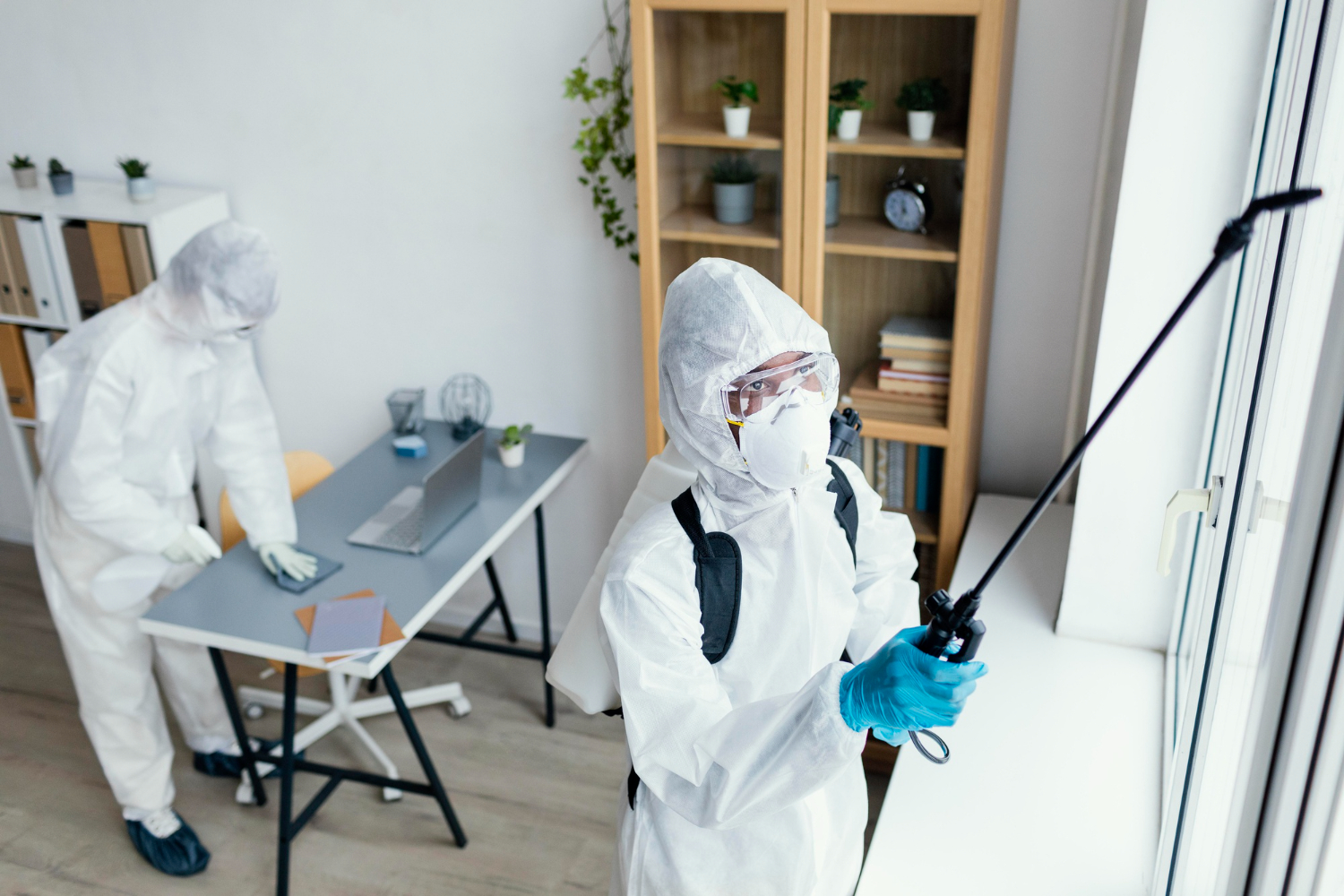
Headaches that started right after you moved into a new BTO or freshly renovated flat, and that ease when you leave the house, are almost always your nervous system reacting to formaldehyde and TVOCs released by carpentry, paint, and adhesives. The pattern is consistent, the mechanism is well understood, and the fix is straightforward once you confirm the source.
The 60-second answer
Indoor air pollutants in a new flat affect more than just your eyes and throat. Above moderate levels, formaldehyde and other volatile organic compounds (VOCs) cross the nasal mucosa, irritate the trigeminal nerve, and trigger neurogenic inflammation that the brain registers as a tension or pressure headache. The dose-response is gradual, which is why these headaches often start as mild fogginess, build through the day, and peak in the evening or on waking.
The diagnostic signature in a Singapore BTO is specific: dull or pressing headache that starts within an hour of being home, eases within 60 to 120 minutes of going out, worsens on humid or hot days, and is worst in the bedroom after a full aircon-on night. If two or more of those match, the cause is your home, not your work or your phone.
Why VOCs cause headaches in the first place
Formaldehyde, benzene, and toluene are small molecules that pass through the lining of your nose and reach the trigeminal nerve, the largest sensory nerve in the face. When stimulated, the trigeminal system releases inflammatory peptides (CGRP and substance P) that dilate cranial blood vessels and produce the diffuse, pressing pain you experience as a tension headache. People who are already migraine-prone have a more reactive trigeminal system, which is why they react to lower exposure levels.
The reaction is reversible. Move out of the exposure for a few hours and the inflammatory peptides clear, the vessels normalise, and the headache resolves. This is also why the work-versus-home test is so reliable: the environment is the variable, your physiology is the constant.
The work-versus-home diagnostic
If you suspect your headaches are from indoor air, run a 7-day log. The columns that matter:
- Time you woke up and how the headache felt then. Worst-on-waking patterns to bedroom over-concentration overnight.
- When you left the flat and when the headache eased. A clear improvement within 60 to 120 minutes of leaving is the strongest signal.
- What rooms you spent time in at home. Headaches that track to the bedroom or the room with the most new carpentry are diagnostic.
- Weather conditions. Hot, humid, low-wind days raise indoor VOC levels and intensify symptoms.
- Confounders. Coffee timing, screen hours, sleep duration, alcohol the night before. Rule these out as you log.
After 7 days, you usually have a clear pattern. If the headache map overlays the home map, the cause is in the home.
Why Singapore BTOs hit harder than overseas data suggests
Most online guides on new-flat headaches reference data from cooler climates. Three things make Singapore BTOs more reactive:
- Heat-driven emission. Formaldehyde release from urea-formaldehyde resin roughly doubles for every 7°C rise in temperature. A bedroom that sits at 30 to 33°C in the late afternoon emits 2 to 4 times faster than the 20 to 22°C labs the safety data is from.
- Sealed sleeping environment. Most Singapore households run aircon at night with windows shut. VOCs accumulate from 11pm to 7am, peaking just before you wake up. The wake-up headache pattern is so consistent it is almost diagnostic.
- Heavy carpentry per square metre. Singapore BTOs have a lot of built-in furniture per unit area. A typical 3-room flat after ID work has 30 to 50 square metres of MDF surface, mostly hidden behind laminate. Same volume of furniture in a Sydney apartment is closer to 15 to 25 square metres.
The most common headache sources in a BTO bedroom
In our testing of new BTO and condo bedrooms across Singapore, four sources cover most cases:
- Built-in wardrobes. Often the highest single-source reading. The interior is unlaminated MDF or blockboard with E1 or E2 grade adhesives. Vapour accumulates inside overnight and leaks into the room every time the door is opened.
- Mattress and bed frame. Foam, fabric finishes, and adhesives release a steady, lower-concentration baseline directly under your face for 7 to 9 hours.
- Painted walls. Lower-cost interior paint can off-gas heavily for 2 to 4 weeks, then taper. Important contributor in the first month.
- Headboard and floor laminates. Adhesives matter more than the visible surface. Cut edges on flooring leak more than the finished face.
A short diagnostic walk through with your nose, similar to the one in the chemical smell post, usually identifies which one is dominant.
What to try this week before booking treatment
Before deciding on professional treatment, two changes give you a fast read on whether the home is the cause:
- Sleep with the bedroom door and windows open for three nights. Run a fan, no aircon. If wake-up headaches stop, you have confirmed the cause.
- Move temporarily to a different bedroom or sofa for two nights. A clear difference between rooms confirms which space is the worst source.
These are diagnostic, not solutions. They tell you whether to invest in testing and treatment, but they do not fix the underlying emission.
When to escalate to testing or treatment
The threshold to escalate is not just about how bad the headaches are. It is about who is sleeping in the room and how long the exposure will continue.
- Pregnant women, infants, young children, and people with asthma or migraine should not “wait it out.” The exposure that gives an adult a daily mild headache may produce more lasting effects in these groups. See the pregnancy and indoor air guide for thresholds.
- Persistent headaches past week 6 despite consistent ventilation indicate the source emits faster than air exchange clears it. This will not resolve naturally for many months.
- Symptoms in more than one household member rules out individual-specific causes and points hard at the environment.
In any of these cases, an indoor air quality test gives you the data to make the next decision. We test at the breathing zone of every bed, inside every cabinet, and against the WHO 0.1 mg/m³ guideline.
How treatment changes the headache picture
Source-level treatment combines a liquid catalyst sprayed onto cabinet interiors and exposed engineered wood (which converts formaldehyde to water and CO₂ at the surface) and a photocatalytic coating on walls and ceilings (which works on the airborne portion). For a typical 4-room HDB bedroom, this drops formaldehyde from a pre-treatment 0.3 to 0.5 mg/m³ to under 0.08 mg/m³ within 24 hours.
Most clients with confirmed VOC-driven headaches report substantial improvement within 3 to 7 days post-treatment, with the wake-up headache pattern resolving first. Read more on the formaldehyde and TVOC removal page or the HDB and BTO specific guide.
If your symptom is also or primarily eye stinging when opening cabinets, the eyes-sting cabinets guide covers the cabinet-as-point-source case.
Sources
- World Health Organization. Guidelines for Indoor Air Quality: Selected Pollutants. WHO Regional Office for Europe, 2010.
- Wolkoff, P., Nielsen, G.D. Non-cancer effects of formaldehyde and relevance for setting an indoor air guideline. Environment International, 2010.
- International Agency for Research on Cancer. IARC Monographs Volume 100F: Formaldehyde. WHO, 2012.
- U.S. EPA. Volatile Organic Compounds’ Impact on Indoor Air Quality.
Frequently asked questions
How do I tell if my headache is from indoor air quality and not something else?
The strongest signal is the work-versus-home test. If headaches consistently start within 30 to 90 minutes of being in your new flat and ease within an hour or two of leaving, the home environment is the trigger. Caffeine withdrawal, dehydration, screen time, and posture cause headaches too, but those track your behaviour, not your location. Keep a 7-day log of when headaches start and resolve, and a pattern usually emerges quickly.
Can off-gassing cause migraines?
VOC exposure can trigger migraines in people who are already migraine-prone, but it does not cause classical migraine on its own. The more common pattern is a tension-type or sinus-pressure headache, often with eye irritation, scratchy throat, or fatigue at the same time. If you are getting full migraine episodes (visual aura, nausea, light sensitivity) after moving in, see a doctor first to rule out other causes, then assess the environment in parallel.
Will my GP be able to diagnose this?
Probably not directly. Most GPs will look for systemic causes like blood pressure, sinus infection, or musculoskeletal tension. The diagnosis of an indoor-air-related headache is typically a diagnosis of exclusion: rule out everything else first, then look at exposure patterns. If your GP is unfamiliar with the link, an air quality test gives objective evidence to bring back to the consultation.
What level of formaldehyde causes headaches?
Headaches commonly appear at sustained exposure above 0.1 to 0.3 mg/m³, though sensitivity varies widely. Children, pregnant women, and people with chemical sensitivity often react below 0.1 mg/m³. Singapore's WHO-aligned reference is 0.1 mg/m³ over a 30-minute average. New BTO bedrooms in their first year regularly measure 2 to 5 times that level overnight.
I am not getting headaches but my partner is. Why?
Inter-individual sensitivity to VOCs is real and can vary by a factor of 5 or more. Hormonal cycle, sleep quality, and existing conditions like migraine, asthma, or chemical sensitivity all shift the threshold. The person with headaches is not imagining it; the other person's threshold is just higher. The ambient level is the same for both.
If I just sleep with the aircon on, will the headaches stop?
Usually they get worse, not better. Aircon recirculates air without exchanging it with outside, so VOCs accumulate steadily through the night. The classic pattern is a flat-rate dull headache on waking that improves once you open the windows for breakfast. If your headache is worst in the morning and best in the late afternoon, that pattern alone tells you the bedroom is over-concentrated overnight.

Worried About Your Indoor Air Quality?
Get a free site inspection and air quality assessment. We'll show you exactly what's in your air — and how to fix it.