HFMD Outbreak Recovery in Singapore Childcare and Offices: The 48-Hour Playbook
28 April 2026 · 7 min read
A confirmed HFMD case at your childcare or office triggers MOH/ECDA notification, deep disinfection, and parent or staff communication. Here is the 48-hour response playbook.
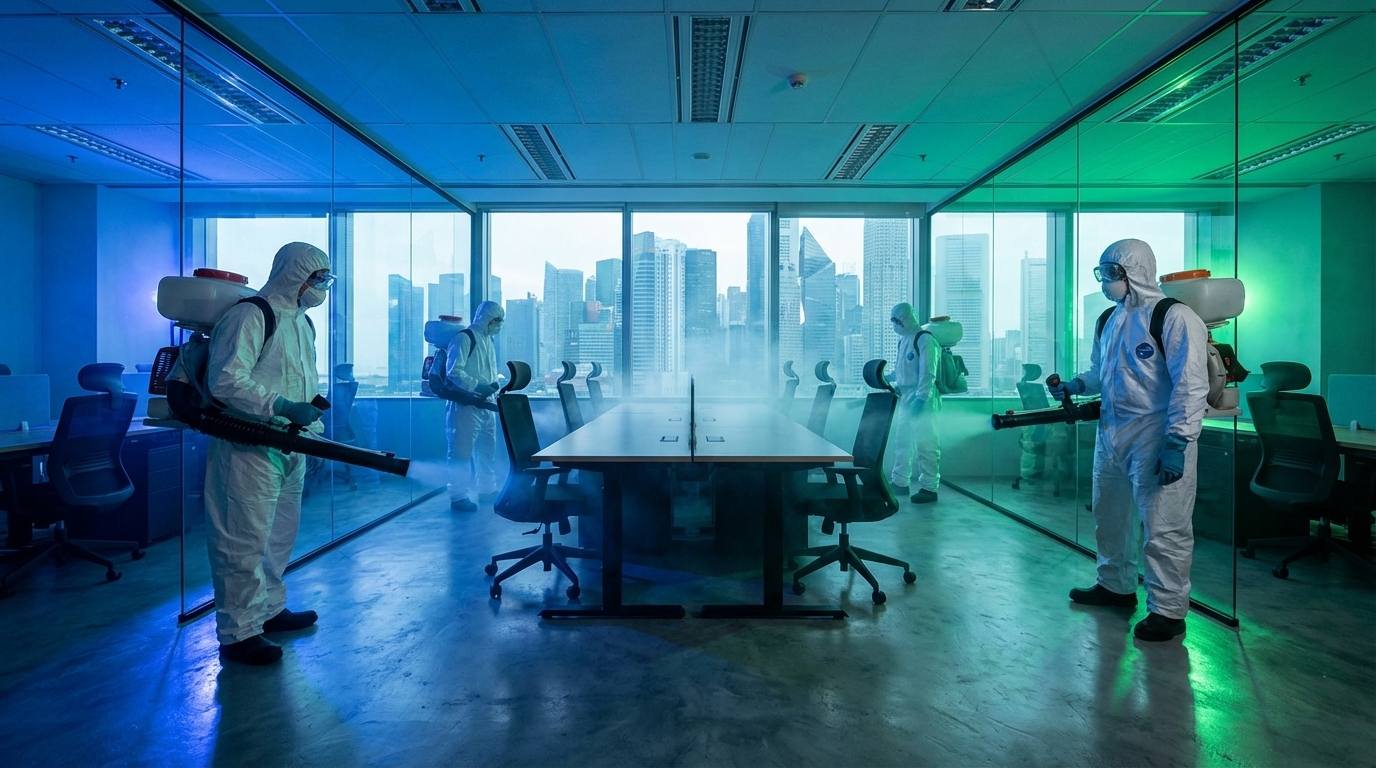
A confirmed hand-foot-mouth disease (HFMD) case at your Singapore childcare or office triggers a 48-hour response window: isolation, ECDA or MOH notification, same-day deep disinfection, and parent or staff communication. Mishandling any one of these turns a single case into a cluster outbreak and a regulatory headache. Here is the playbook that works.
The 60-second playbook
For a confirmed HFMD case in Singapore childcare or office:
- Hour 0: Isolate the affected child or staff member. Notify their primary contact (parent, line manager).
- Hour 1: Internal notification to centre principal or facility manager. Identify rooms and surfaces the affected person was in contact with in the 48 hours before symptom onset.
- Hour 4: Notify ECDA (childcare) or MOH (workplace). Document the incident timeline.
- Hour 24: Schedule same-day deep disinfection. Use NEA-listed QAC chemistry with extended dwell for non-enveloped viruses.
- Hour 48: Complete disinfection. Deliver written report. Communicate with parents or staff. Resume operations with enhanced surveillance for the next 7 to 14 days.
The full response cycle from confirmed case to safe re-occupancy is usually 24 to 48 hours when handled cleanly.
Why HFMD needs a different protocol than COVID or flu
HFMD is caused by enteroviruses (Coxsackievirus A16, EV71, others). Two characteristics matter for disinfection:
- Non-enveloped virus. No lipid envelope to disrupt, so HFMD is more resistant to standard disinfectants than enveloped viruses (COVID, flu, RSV). Effective kill requires extended contact time (8 to 10 minutes wet contact) at correct concentration.
- Faecal-oral and surface transmission. Spreads via saliva, blister fluid, and contaminated surfaces (toys, hands, shared utensils). This makes surface and toy disinfection more important than airborne droplet control.
The implication for disinfection: standard QAC chemistry works but needs longer dwell, focused application on toys, bedding handling areas, restrooms, and high-touch surfaces. A short-cycle whole-room fog without surface-level focus is insufficient for HFMD.
The hour-by-hour response timeline
Hour 0 to 1: Isolation and internal notification
- Move the affected child or staff member to an isolation area. For childcare: a quiet room with the child supervised by one staff. For office: send the staff member home immediately; do not let them re-enter common areas.
- Call the parent for collection (childcare) or confirm sick leave logged (office).
- Internal notification to the centre principal or facility manager. Document: who, when symptoms started, which rooms and surfaces they were in contact with, and the staff who interacted with them.
Hour 1 to 4: Surface mapping and ECDA/MOH notification
- Map the rooms and surfaces the affected person used in the 48 hours before symptoms (HFMD incubation is 3 to 6 days, with most surface contamination in the day or two before symptoms become obvious).
- For childcare: notify ECDA per the 24-hour reporting requirement. The notification includes case details, suspected exposure window, and planned response.
- For workplace: notify MOH per the workplace HFMD reporting protocol if applicable.
- Brief other staff on the situation and on enhanced hygiene protocol for the next 14 days.
Hour 4 to 24: Schedule same-day disinfection
- Call your disinfection provider. WhatsApp +65 9070 5064 reaches UC Fresh Air same-day for confirmed HFMD cases.
- Confirm scope: classroom-level for single case, broader for cluster. ECDA may issue specific scope guidance during the case-by-case follow-up.
- Confirm scheduling: childcare typically end-of-day same day or overnight before next operating day. Office overnight or weekend.
- Start parent or staff communication. Be specific about the timeline and the disinfection plan.
Hour 24 to 48: Disinfection execution
- Disinfection technician arrives in branded uniform with NEA-listed QAC chemistry, ULV fogger, electrostatic spray, and manual wipedown supplies.
- Toy areas, play surfaces, bedding handling areas, sinks, restrooms, high-touch surfaces (door handles, light switches, taps) get concentrated coverage with extended dwell.
- ULV fog covers the whole-room. Documented dwell of 30 to 60 minutes (extended for non-enveloped virus protocol).
- Ventilation cycle of 30 to 60 minutes (extended to 90 minutes for childcare with infants).
- Same-day written report: products used, batch numbers, MSDS, dwell times, photos, certificate of completion. Ready for ECDA or MOH file.
Hour 48 onward: Resume with surveillance
- Re-open the disinfected premises. Other healthy children or staff return.
- Enhanced surveillance for 14 days: temperature checks at arrival, daily inspection for blisters or sores, parent or staff sick-day flagging.
- Affected person returns when all blisters have dried (typically 7 to 10 days from symptom onset) and they are fever-free, per ECDA or MOH guidance.
Childcare-specific considerations
Singapore childcare operations have an additional layer of stakeholders and protocol:
- Toy disinfection is the highest-priority surface zone. Pre-school and infant toys are mouthed, drooled on, and shared continuously. Plastic toys are QAC-compatible; soft toys may need machine wash at 60°C plus tumble dry.
- Bedding and linen handling. Cot sheets, nap mats, and bibs the affected child used in the last 48 hours need to be bagged, washed at 60°C, and tumble-dried thoroughly. Tag the bag with the date and child name for tracking.
- Restrooms and changing tables. Critical zones for HFMD given the faecal-oral transmission route. Concentrated QAC application with extended dwell on changing tables, toilet seats, taps, and surrounding floor.
- Parent communication. Standard ECDA-aligned communication template: notification of confirmed case (without identifying the child), the disinfection schedule, the surveillance protocol, when normal operations resume, and what to watch for at home. Send within 24 hours.
- Cluster threshold. ECDA may issue specific guidance if multiple cases appear within the incubation window. Be ready to scale disinfection scope to broader areas of the centre.
Office-specific considerations
For Singapore offices with a confirmed HFMD case (usually a staff member who has young children at home):
- Single-case office disinfection scope. The affected staff’s workstation, pantry surfaces they used, restrooms on their floor, lift buttons on their typical route. Less aggressive than childcare unless the staff member had close contact with multiple colleagues.
- HR communication. Notify staff who had close contact (within 1 metre for over 15 minutes) in the 48 hours before symptoms. Recommend they monitor for symptoms for 6 days.
- Workplace return. The affected staff returns when all blisters have dried and they are fever-free, typically 7 to 10 days from symptom onset.
- Documentation for HR and insurance. Same written report standard. File for HR records, workplace insurance claims, and tenancy compliance if the building MCST asks.
What disinfection should cost for HFMD outbreak
Sample 2026 Singapore market ranges for same-day HFMD response:
- Single classroom childcare disinfection: S$400 to S$1,200, same-day premium included
- Whole-centre childcare for cluster outbreak: S$1,500 to S$5,000+, project-priced
- Single office floor with affected staff: S$600 to S$1,800, same-day premium included
- HDB or condo home where affected child lives: S$300 to S$800
- Recurring contract with same-day priority included: typically no surcharge above contract rate
For active childcare centres and busy offices, a recurring monthly disinfection contract with same-day outbreak priority included is usually the cheaper total cost over a year.
Common mistakes that turn a case into a cluster
Five common mistakes to avoid:
- Delaying notification to ECDA or MOH. The 24-hour window is hard. Late notification is a regulatory compliance issue independent of the disinfection response.
- Scoping disinfection too narrowly. A single classroom case in childcare often touches shared toy storage, common play areas, and shared restrooms. Map the actual contact zones, not the assumed zones.
- Using cleaning instead of disinfection. A wipe-down with ordinary detergent does not kill HFMD enteroviruses. NEA-listed QAC with proper dwell is the minimum.
- Skipping toy and bedding handling. The biggest transmission vector in childcare. Skipping these because they are not listed in standard “disinfection scope” causes recurrence.
- Poor parent or staff communication. Vague communication amplifies anxiety and erodes trust. Specific timeline, named protocol, and clear return-to-care criteria are what work.
When to escalate beyond standard HFMD disinfection
A few scenarios where the standard same-day protocol is not enough:
- Cluster outbreak (3+ cases within incubation window). Whole-centre or whole-floor disinfection scope, ECDA case-by-case guidance, and possible temporary closure.
- HFMD cluster overlapping with another outbreak (norovirus, flu). Combined protocol with virus-specific dwell times documented separately.
- Repeated HFMD cases despite scheduled disinfection. Indicates surface-protection gaps. Pair with antibacterial coating on high-touch surfaces (toys, door handles, taps, bedding cabinets) for continuous protection between disinfection visits.
- HFMD in a vulnerable population (immunocompromised, infants under 6 months). Stricter return-to-care criteria; consult MOH guidance specifically.
For continuous protection between disinfection visits, see where bacteria hide in Singapore offices which covers antibacterial coating principles transferable to childcare and clinical settings.
Sources
- Singapore Ministry of Health, Hand, Foot and Mouth Disease (HFMD) clinical guidance.
- Singapore Early Childhood Development Agency (ECDA), Health and hygiene guidance for licensed centres.
- World Health Organization, Guidelines for the clinical management of HFMD.
- Singapore National Environment Agency, List of household products and active ingredients for surface disinfection.
Frequently asked questions
What is the first step after a confirmed HFMD case in childcare or office?
Within the first hour, isolate the affected child or staff member and notify their primary contact for collection or sick leave. Within 4 hours, notify ECDA (childcare) or MOH (workplace) per the standard HFMD reporting protocol. Within 24 hours, schedule same-day deep disinfection covering toy areas, classrooms, restrooms, and high-touch surfaces. Within 48 hours, complete disinfection and deliver written report. Communicate with parents or staff at each stage with clear timeline.
Do I need to notify ECDA or MOH for an HFMD case?
Yes. ECDA-licensed childcare centres must notify ECDA within 24 hours of a confirmed HFMD case in a child or staff member. MOH-licensed clinics and workplaces with confirmed HFMD cases follow MOH reporting protocol. The notification triggers ECDA or MOH guidance on classroom or zone closure, return-to-care criteria, and surveillance. UC Fresh Air written disinfection reports satisfy the documented infection control component of the notification.
How fast can same-day HFMD disinfection be done in Singapore?
UC Fresh Air responds same-day to confirmed HFMD cases in Singapore childcare, offices, schools, and homes. Most pre-12pm calls get on-site response the same afternoon or evening. The disinfection itself takes 90 to 150 minutes for a typical childcare classroom or office floor, with re-occupancy safe within 30 to 60 minutes after the ventilation cycle. WhatsApp +65 9070 5064 for fastest response.
What does HFMD disinfection cover?
HFMD disinfection covers all rooms with focus on toy areas, play surfaces, bedding handling areas, restrooms, kitchen or pantry, and high-touch surfaces (door handles, light switches, taps, sinks). NEA-listed QAC chemistry with extended dwell time for non-enveloped viruses (HFMD enterovirus is non-enveloped, requires longer contact). ULV fogging for whole-room coverage plus electrostatic spraying on high-touch. Manual wipedown for sensitive equipment.
When can children or staff return to the premises after HFMD disinfection?
Re-occupancy of the premises is safe within 30 to 60 minutes of disinfection completion after the ventilation cycle. Return of the affected child or staff member follows ECDA or MOH guidance: typically when all blisters have dried (usually 7 to 10 days from symptom onset) and the child or staff is fever-free and well. Other healthy children or staff can return to the disinfected premises immediately.
Should I close the entire childcare or just the affected classroom?
ECDA guidance for HFMD outbreak management depends on case count and pattern. A single confirmed case typically triggers classroom-level disinfection plus enhanced surveillance, not centre-wide closure. Cluster cases (multiple children in different classrooms within the incubation window) may trigger broader closure as advised by ECDA. UC Fresh Air same-day disinfection scope can scale from single classroom to whole-centre depending on the ECDA guidance for that incident.

Worried About Your Indoor Air Quality?
Get a free site inspection and air quality assessment. We'll show you exactly what's in your air — and how to fix it.