Silver-Ion vs Photocatalytic Coatings: Which Antibacterial Layer Suits What
11 June 2026 · 5 min read
Both kill bacteria continuously, but they work differently and last different times. Here is plain-English mechanics and where each fits.
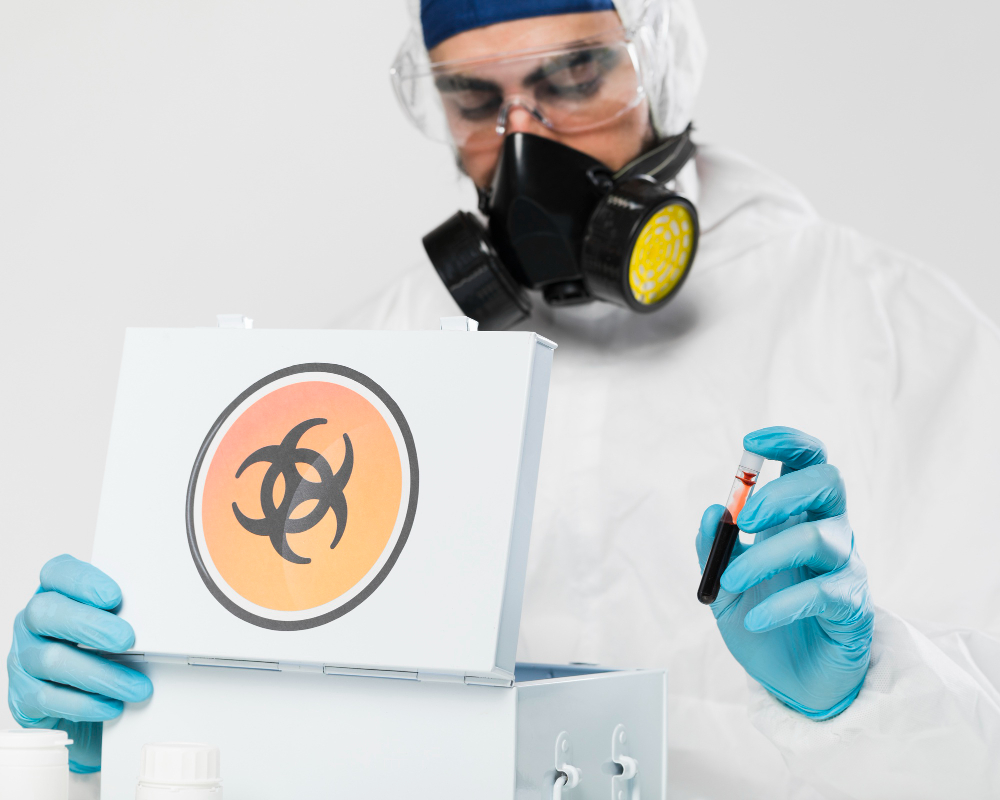
Both silver-ion and photocatalytic coatings kill bacteria continuously between cleanings. They use different chemistry, last different lengths of time, and suit different parts of a building. The right answer is usually both, in different places. This guide covers the mechanics in plain language and the practical decisions for Singapore offices, childcare centres, and clinics.
The 60-second answer
Silver-ion coatings release a slow, controlled flow of silver ions (Ag+) at the surface. Bacteria that contact the surface absorb the ions, which damage their cell walls and DNA. The bacteria die. Silver-ion is good for high-touch surfaces (door handles, switches, taps).
Photocatalytic coatings use titanium dioxide (TiO₂) that activates when light hits it. The activated surface generates reactive oxygen species that destroy bacteria, viruses, and even break down VOCs. Photocatalytic is good for walls, ceilings, and large surfaces with light access.
The combined approach (sometimes branded as VLAG coating) uses both, each where it works best.
How silver-ion coatings work
A simple analogy: imagine a slow-release fertiliser pellet, but instead of nitrogen, it releases silver ions at a steady low rate.
- The chemistry. Silver atoms (Ag) embedded in the coating slowly oxidise to silver ions (Ag+) at the surface. The ions are the active form.
- What they do. Silver ions disrupt bacterial cell membranes by binding to sulphur and nitrogen groups in proteins. They also interfere with DNA replication. Result: bacteria cannot multiply and die.
- Why it lasts. The release rate is slow and the silver reservoir is sized for 12 to 24 months on a typical high-touch surface. After that, replacement keeps it at full efficacy.
Silver-ion has been used in human applications for over a century: wound dressings, water purification, food storage. The safety profile is well established.
How photocatalytic coatings work
Photocatalytic uses light as the energy source rather than a reservoir of active material.
- The chemistry. Titanium dioxide (TiO₂) is the same compound used in many sunscreens and food colourings. When UV or visible light hits TiO₂, electrons in the surface jump to a higher energy state.
- What they do. The energised electrons react with water vapour and oxygen in the air to form reactive oxygen species (mostly hydroxyl radicals and superoxide). These tear apart bacterial cell walls, viral envelopes, and organic molecules including some VOCs.
- Why it lasts. The TiO₂ itself is not consumed; it is a catalyst. Light keeps regenerating the active state. So the coating works for 3 to 5 years before re-coating becomes necessary, and the limit is more about wear and abrasion than chemistry.
Photocatalytic is the same broad mechanism that makes some commercial buildings “self-cleaning”, light activates the coating, which breaks down dirt and grime over time.
When silver-ion suits
Three properties make silver-ion the better choice in some places:
- Low-light or no-light areas. Storage rooms, dark corridors, lockers. Silver-ion does not need light to work.
- High-touch, frequently-cleaned surfaces. Door handles, switches, taps. The wear pattern matches silver-ion’s strength.
- Fabric and porous surfaces. Chair upholstery, mat covers, towel storage. Silver-ion impregnates fabric well.
In a typical office, silver-ion is the right choice for the 12 to 25 high-contact surfaces that drive most transmission risk.
When photocatalytic suits
Three properties make photocatalytic the better choice elsewhere:
- Large surface areas with light. Walls, ceilings, partitions. Cost-effective per square metre at scale.
- Spaces where airborne pathogens matter. TiO₂ also works on bacteria and viruses suspended in the air near the surface, which silver-ion does not.
- Long-life applications where re-coating is disruptive. Hospital wards, clean rooms, premium offices.
Photocatalytic also breaks down some indoor VOCs (formaldehyde, ammonia), which is why it is paired with formaldehyde treatment in some service offerings.
The combined approach
Most well-designed installations use both:
- High-touch surfaces (door handles, switches, taps): silver-ion. Re-coat every 12 to 24 months.
- Walls, ceilings, partitions: photocatalytic. Re-coat every 3 to 5 years.
- Specific high-stake surfaces (childcare changing tables, clinic bench tops): both. Belt and braces.
The combined approach, sometimes branded as VLAG, gives full coverage for both surface contact and airborne pathogens. Cost is roughly 1.3 to 1.5x silver-ion alone, but suitable for most full-building installations rather than just the high-touch points.
Cost ranges in Singapore
Rough market rates as of 2026:
- Silver-ion coating per surface. S$15 to S$30 for a typical door handle, switch, tap. S$50 to S$120 for a larger surface (table top, counter).
- Photocatalytic coating per square metre. S$8 to S$18 per m² for walls, S$10 to S$20 per m² for ceilings.
- Full small office package (12 to 25 high-touch surfaces + walls + ceilings). S$2,500 to S$6,500.
- Childcare centre full package. S$5,000 to S$12,000 depending on size.
- Clinic full package. S$8,000 to S$25,000 depending on number of rooms.
Re-coating maintenance is roughly a quarter of the original cost annually for the silver-ion components.
What antibacterial coatings do not do
Worth being explicit:
- They do not replace cleaning. Coatings reduce surface bacterial load between cleanings; they do not remove dirt or organic matter. Daily wipe-downs continue.
- They do not work against all pathogens equally. Tested against common targets (E. coli, S. aureus, H1N1 influenza). Specialised pathogens (M. tuberculosis, C. difficile spores) need different approaches.
- They do not protect hands. Hands are a separate transmission vector. Hand sanitiser and hand-washing are still primary controls.
- They do not extend shelf life of food. Food contact is fine, but the coating is not a food preservative.
- They do not address airborne transmission long-term. Photocatalytic helps with airborne pathogens near surfaces, but ventilation and HEPA filtration are the primary controls for breath-borne disease spread.
A coating is one layer of a hygiene system, not the whole system.
For the broader topic of where surface bacteria concentrate, see where bacteria hide in Singapore offices. For childcare-specific applications, see childcare hygiene standards Singapore. For the antibacterial coating service in detail, see the main service page.
Sources
- Russell, A.D., Hugo, W.B. Antimicrobial activity and action of silver. Progress in Medicinal Chemistry, 1994.
- Foster, H.A., et al. Photocatalytic disinfection using titanium dioxide: spectrum and mechanism of antimicrobial activity. Applied Microbiology and Biotechnology, 2011.
- Singapore Health Sciences Authority. Antimicrobial coatings: regulatory framework.
- World Health Organization. Antimicrobial resistance and infection prevention guidance.
Frequently asked questions
Which lasts longer?
Silver-ion coatings on high-touch surfaces typically last 12 to 24 months at full antibacterial efficacy. Photocatalytic coatings on walls and large surfaces last 3 to 5 years. The difference is wear: silver-ion is gradually consumed as it kills bacteria, photocatalytic is regenerated by ambient light.
Are they safe for children and food contact?
Yes, after curing. Both technologies are used in food-contact applications, medical devices, and child-safe products. Silver-ion has been used in water filtration and wound dressings for decades. Photocatalytic TiO₂ is the same chemistry as the sun protection in many sunscreens. Once the coating has cured (24 hours), the active components are bound to the surface and do not transfer.
Can both be used together?
Yes. The combined approach (called VLAG coating in some Singapore products) puts silver-ion on high-touch surfaces and photocatalytic on walls and ceilings. Together, they cover both surface contact transmission and airborne pathogens. Most childcare and clinic installations use the combined approach.
Will the coating change how the surface looks?
Modern coatings are transparent and dry to a thin film that is invisible on most surfaces. There can be a very subtle sheen change on matte surfaces, but most people cannot see it. The coating does not affect the colour of the surface underneath.
Does it work on metal as well as on wood and plastic?
Yes, both work on most surface types: metal, plastic, wood, fabric, ceramic, glass. Metal handles, plastic switches, fabric chair covers, ceramic taps. The bond chemistry adjusts to the surface.
What about during a power outage, does photocatalytic still work?
Photocatalytic needs light (sunlight or indoor LED) to activate. In total darkness it is inactive but not damaged, it resumes when light returns. Silver-ion is light-independent, so it works regardless. In rooms with consistently low light (storage, basements), silver-ion is the better choice.
Worried About Your Indoor Air Quality?
Get a free site inspection and air quality assessment. We'll show you exactly what's in your air — and how to fix it.