What an Indoor Air Quality Test Actually Measures (and What It Does Not)
8 May 2026 · 6 min read
What gets measured during a Singapore IAQ test, what equipment is used, what the report should contain, and the common gotchas. Read this before booking a test.
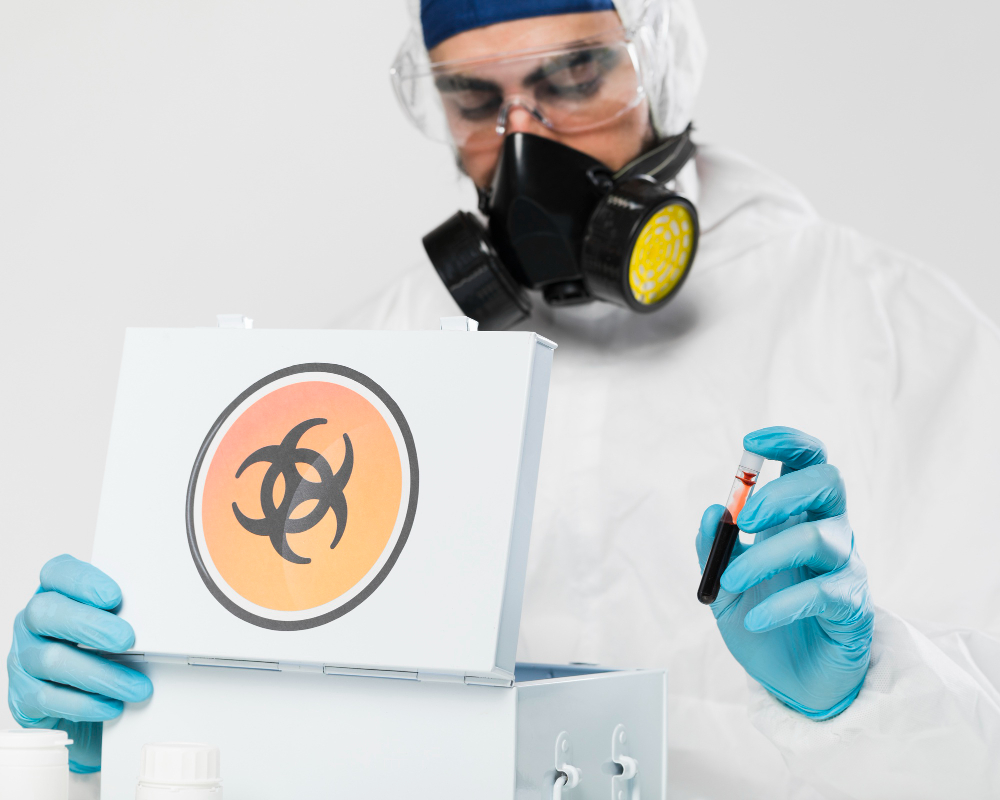
An indoor air quality test in Singapore typically measures formaldehyde and total volatile organic compounds (TVOC) at multiple points in your flat, identifies the dominant emission sources, and gives you a written report against the WHO 0.1 mg/m³ guideline. Knowing what is in the test, what equipment is used, and what the limits are helps you choose a competent provider and act sensibly on the results.
The 60-second answer
A standard Singapore residential IAQ test covers two parameters that matter most for new-flat air quality: formaldehyde (the single most health-relevant indoor pollutant) and TVOC (the sum of other volatile compounds). It uses a calibrated formaldehyde monitor and a TVOC photoionisation detector to take readings at several points in each room, including inside cabinets where source concentrations are highest. The test takes 60 to 120 minutes for a HDB or condo flat. The deliverable is a written report ranking rooms and sources, with comparison against WHO indoor air guidance.
What it does not do: it does not detect mould, dust mites, bacteria, or asbestos. Those are separate tests. It also does not predict next year’s levels, emission rates change with temperature, humidity, and how the flat is used.
What gets measured
Three parameters are standard, with two more sometimes added:
- Formaldehyde (HCHO). The Group 1 carcinogen and most health-relevant residential VOC. Measured with an electrochemical sensor or DNPH cartridge, both calibrated against laboratory reference standards. Reported in mg/m³ or ppb.
- TVOC (total volatile organic compounds). A combined reading of dozens of common VOCs (benzene, toluene, xylene, styrene, acetaldehyde, ethanol, isopropanol, terpenes). Measured with a photoionisation detector (PID). Reported in mg/m³ or ppm equivalent.
- Temperature and relative humidity. Used to interpret the formaldehyde and TVOC numbers, since emission rates are temperature- and humidity-dependent.
- PM2.5 and PM10 (sometimes). Particulate matter from outdoor air or indoor activities. More relevant for haze season or homes near construction.
- CO₂ (sometimes). Indicator of ventilation adequacy, mostly relevant for offices and high-occupancy spaces rather than residential.
For most Singapore flats, the first two parameters cover 90 percent of what matters.
How the equipment works
The professional-grade equipment used for a residential test is meaningfully different from consumer meters:
- Electrochemical formaldehyde sensors (e.g., RAE Systems FormaldeMeter, Graywolf, Aeroqual). Reaction-based detection, accuracy plus or minus 10 to 15 percent at the relevant range, calibrated against DNPH reference. Reads continuously.
- DNPH cartridge sampling (gold standard). Air is pumped through a cartridge for 30 minutes; the cartridge is sent to a lab for HPLC analysis. Accuracy plus or minus 5 percent, more expensive and slower (results in 3 to 5 days). Used when legal-grade evidence is needed (e.g., disputes with developers).
- Photoionisation detectors (PID). UV lamp ionises VOCs; the resulting current is proportional to total VOC concentration. Sensitive to most VOCs but blind to formaldehyde (which has too high an ionisation potential). This is why TVOC and formaldehyde are measured separately.
- Reference data loggers. Continuous temperature, humidity, and (sometimes) CO₂ for context.
A reputable provider can name the equipment they use and produce calibration certificates. Ask. If they cannot, the readings may not be defensible.
How a typical 90-minute test runs
A residential IAQ test in Singapore usually follows this sequence:
- Pre-test conversation (5 to 10 min). Confirm renovation history, ventilation patterns, symptoms, and what rooms to focus on. The technician should ask whether anyone in the household is pregnant, asthmatic, or chemically sensitive.
- Baseline reading at the front door (5 min). Used as the comparison point against indoor readings.
- Per-room sweep (45 to 60 min). Bedroom (breathing zone of bed at 1m height), kitchen, living room, study, child’s room. Each gets a 5 to 10 minute reading at room centre.
- Source identification (15 to 20 min). Open each cabinet, drawer, and wardrobe one at a time. Reading inside the closed unit, then a second reading 30 seconds after opening to capture the surge. Identifies which cabinet is the worst.
- Spot checks on suspected sources (5 to 10 min). Mattress, sofa, painted walls, vinyl flooring as relevant.
- Walk-through and verbal summary (10 min). The technician walks the homeowner through the readings room by room, points out the dominant sources, and previews the written recommendations.
The written report typically arrives within 24 to 48 hours.
What the report should contain
A good report has six elements:
- Per-room readings of formaldehyde and TVOC at the breathing zone, with timestamp and conditions.
- Source-specific readings (cabinets, mattress, paint) ranked from highest to lowest emission.
- Comparison against reference values. WHO 0.1 mg/m³ for formaldehyde, NEA workplace value where relevant, and a pregnancy or infant adjusted line where applicable.
- Calibration and equipment statement. What was used, when it was last calibrated, and to what standard.
- Recommendations. Specific to your readings: ventilation alone (if borderline), targeted treatment of identified sources (if high), or watch-and-recheck (if mild and trending down).
- Re-test schedule. When to measure again and what would change the conclusion.
Reports that just give a single TVOC number with no source identification or no recommendations are weak. Reports with aggressive sales language that leads to a treatment quote regardless of readings are worse.
Common gotchas to avoid
Five things that distort residential IAQ test results:
- Recent cleaning with strong products. Bleach, ammonia, eucalyptus oils elevate TVOC readings for 12 to 24 hours. Skip cleaning for the day of the test.
- Burning candles or incense in the last 24 hours. Adds formaldehyde and PM2.5. Skip these too.
- Strong outdoor air event. Haze, nearby construction, recent rain. Note these in the report so they can be accounted for.
- All windows opened just before the technician arrives. Lowers readings artificially. The room should be in normal closed-up condition for at least 4 hours before testing.
- Summer afternoon vs winter morning. Singapore does not have classical seasons, but the daily and weather cycle still matters. A test on a 33°C, 80 percent RH afternoon reads higher than the same flat on a 26°C, 65 percent RH evening. Note conditions on the report.
What an IAQ test does not measure
Worth being explicit:
- Mould. Requires surface swab or air-particle sampling for fungal spores. Some IAQ testers offer this as an add-on. Different equipment and lab process.
- Dust mites. Allergen-specific test, usually skipped for adults but relevant for asthma sufferers. Lab-based.
- Asbestos. Not relevant for new BTOs (Singapore has banned asbestos in new construction since 1989). Older flats with renovation may need a separate asbestos check before sanding or demolition.
- Bacteria and viruses. Surface swab tests, mostly relevant for offices and clinics.
- Radon. Negligible in Singapore due to soil composition and high-rise concrete construction. Not part of standard residential IAQ tests.
- Specific named VOCs at trace level. A PID-based TVOC reading does not separate benzene from xylene. If you need legal-grade speciation, that is a sorbent tube + GC/MS lab analysis at higher cost.
For most Singapore households, formaldehyde plus TVOC is the right test. The other parameters are case-by-case add-ons.
When to re-test
Three triggers for a re-test:
- Post-treatment verification. Schedule 48 to 72 hours after source-level treatment to confirm the catalyst is working. This is normally included in the treatment service.
- Symptom recurrence. New furniture, seasonal weather change, or new renovation has pushed levels back up. Test before deciding whether the original treatment needs a top-up.
- Annually for chemical-sensitive households. A baseline reading once a year for households with asthmatic, pregnant, or infant occupants. Catches drift early.
For testing in the context of a new flat: see the pre-move-in IAQ checklist for when to schedule the first test. For pregnancy-specific guidance: pregnancy and indoor air quality. For symptom-led testing: chemical smell that won’t go away.
Sources
- World Health Organization. Guidelines for Indoor Air Quality: Selected Pollutants. WHO Regional Office for Europe, 2010.
- National Environment Agency, Singapore. Guidelines for Good Indoor Air Quality in Office Premises.
- U.S. EPA. Indoor Air Quality Building Education and Assessment Model (I-BEAM).
- ASHRAE Standard 62.1. Ventilation for Acceptable Indoor Air Quality.
Frequently asked questions
How much does an IAQ test cost in Singapore?
For a typical HDB or smaller condo, S$280 to S$450 covers a 90-minute in-home test with a written report. Larger landed homes or commercial spaces are priced by floor area, typically S$450 to S$1,200. Watch for very low quoted prices (under S$200), they often use only a low-grade VOC meter without specific formaldehyde measurement, which is the parameter that actually matters.
What is the difference between TVOC and formaldehyde?
TVOC (total volatile organic compounds) is the sum of all detectable VOCs measured by a single sensor, usually a photoionisation detector (PID). Formaldehyde is one specific VOC measured separately because PID sensors have low sensitivity to it. A complete IAQ test measures both, TVOC for the overall load, formaldehyde for the most health-relevant component.
Can I test the air myself with a cheap meter?
Sort of. Consumer formaldehyde meters (the S$30 to S$80 ones from online retailers) have an accuracy of plus or minus 30 to 50 percent and drift quickly out of calibration. They are useful for tracking relative changes (today vs yesterday in the same spot) but unreliable for absolute readings or for decisions that turn on whether you are above or below WHO guidance.
What is in the written report?
A good report contains: per-room formaldehyde and TVOC readings at the breathing zone; readings inside cabinets and the worst-emission sources; comparison against WHO and Singapore reference values; identification of the dominant emission sources; recommended next steps (ventilation, treatment, or no action). Reports that just give a single number without source identification are less useful for deciding what to do.
How accurate are the measurements?
Professional formaldehyde monitors using electrochemical or DNPH-cartridge sampling have accuracy of plus or minus 10 to 15 percent, traceable to standards. PID-based TVOC meters have accuracy of plus or minus 15 to 25 percent. Both are sufficient for the decisions a homeowner needs to make: above or below WHO guidance, dominant source identification, before-and-after comparison.
How should I prepare the flat for the test?
The test should reflect how you actually live in the flat. Run the aircon overnight as you normally would. Keep windows and cabinet doors closed for at least 4 hours before the technician arrives. The technician will open them sequentially during the test. Avoid using cleaning products, candles, or air fresheners in the 24 hours before the test, as they distort TVOC readings.
Related Articles
Worried About Your Indoor Air Quality?
Get a free site inspection and air quality assessment. We'll show you exactly what's in your air — and how to fix it.